
CA Glue for Woodturning and Finishing: Choosing the Right Viscosity
CA glue (cyanoacrylate adhesive) has become an extremely useful material for woodturners. Beyond fast repairs and bonding, it can be used for wood stabilization, filling cracks and voids, securing decorative inlays, and creating a smooth, durable finish on turned projects.
From wooden pens and handles to bowls, rings, ornaments, and other lathe turned pieces, choosing the right CA glue viscosity can make a significant difference in the final result.
Choosing CA Glue Viscosity for Woodturning
CA glue is available in different viscosities, from water thin grades to thick, gap-filling versions. Each has a different purpose in woodworking and woodturning.
Extra Thin & Thin CA Glue
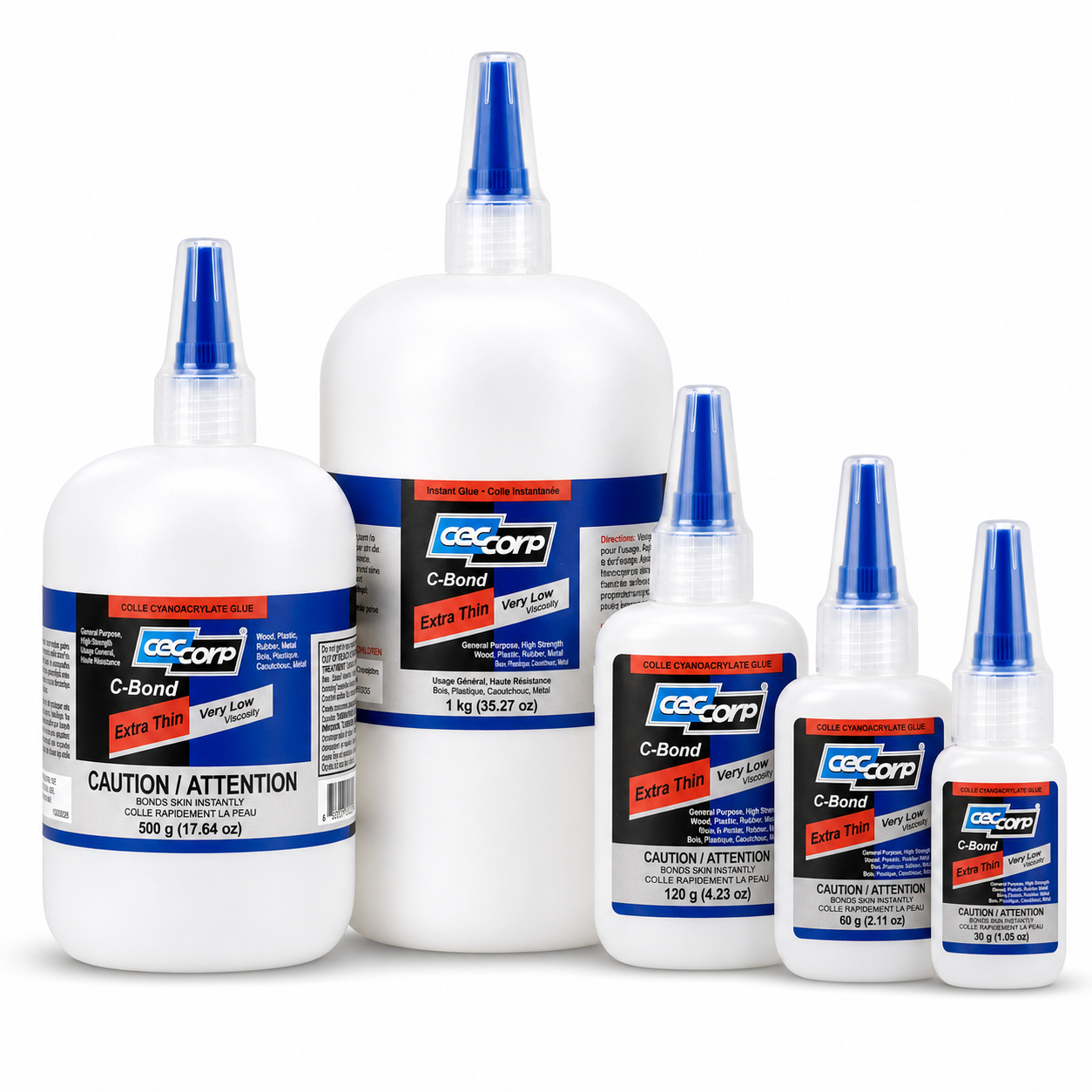
C-Bond Extra Thin CA Glue and C-Bond Thin CA Glue
Thin CA has excellent penetration and wicking ability, allowing it to soak into porous wood and very small cracks.
Common uses include:
- Stabilizing soft, punky, or porous wood
- Penetrating hairline cracks
- Strengthening fragile areas before turning
- Wicking into tight joints
- Securing very fine inlay materials
- Sealing porous end grain
Because C-Bond Extra Thin CA Glue and C-Bond Thin CA Glue can travel deeply into the wood by capillary action, it is particularly useful when penetration is more important than gap filling.
Medium Thin CA Glue
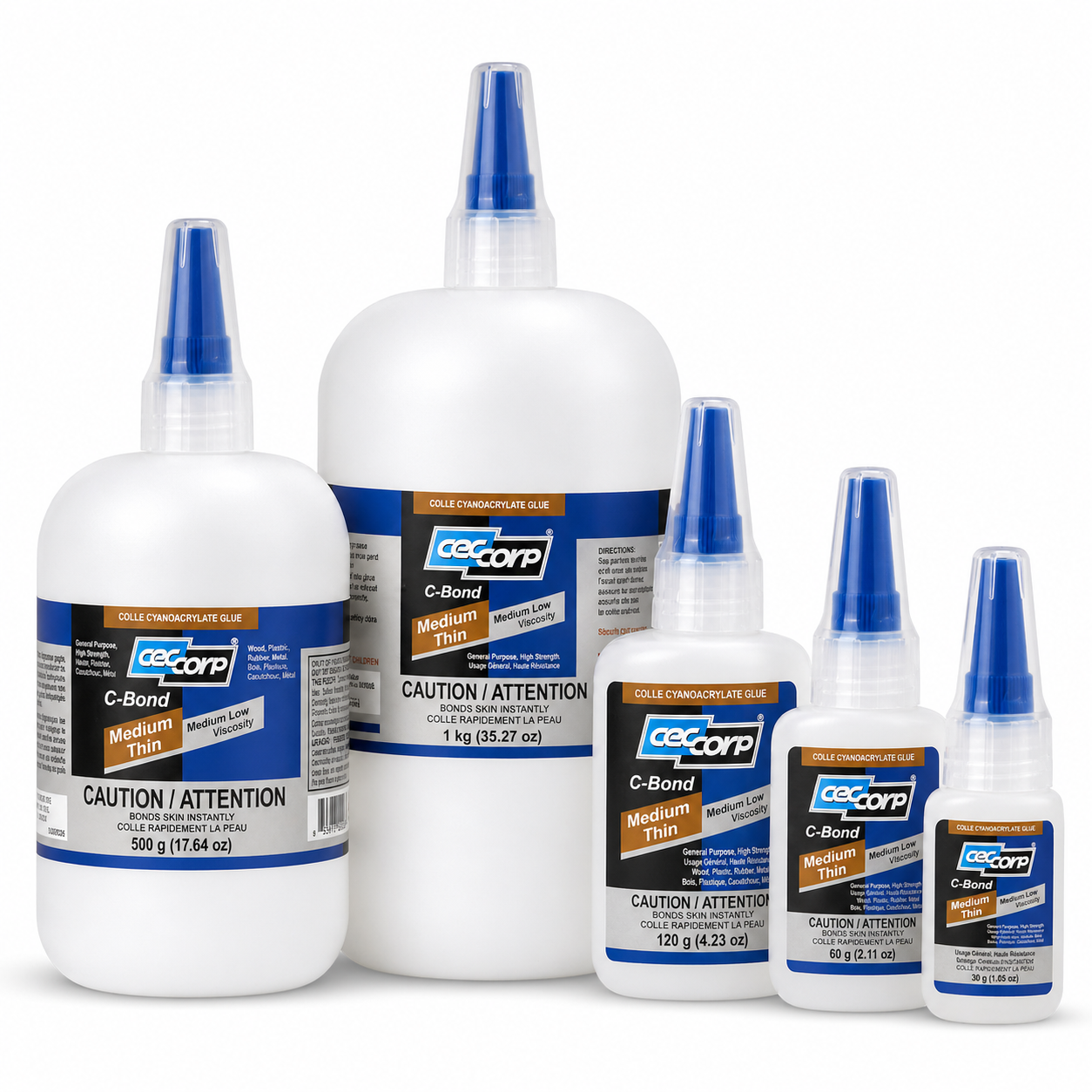
Medium thin viscosity provides a balance between flow, control, and gap filling, making it one of the most versatile choices for woodturning.
It works well for:
- Small cracks and defects
- General wood repairs
- Bonding components
- Pen and small-project assembly
- Decorative inlays
- Building multiple layers during CA finishing
Medium thin CA stays where it is applied longer than thin CA while still spreading relatively easily.
CA Glue for Wood Inlays
CA glue is particularly convenient for creating decorative woodturning inlays.
Materials such as crushed stone, turquoise, shell, metal powder, wood dust, decorative particles, and other compatible materials can be placed into grooves, cracks, or cavities and secured with CA glue.
For very fine particles, C-Bond Extra Thin CA Glue and C-Bond Thin CA Glue can wick through the material and lock it into place. For larger particles or wider cavities, C-Bond Medium Thin CA Glue or C-Bond Medium CA Glue provides better filling and positioning.
After curing, the inlay can normally be turned, sanded, polished, and finished along with the surrounding wood.
CA Glue as a Wood Finish
CA glue can also be used as a hard, smooth finishing system for many small turned objects.
One of the best-known examples is CA finishing for wooden pens, where multiple controlled layers of CA are applied to the rotating workpiece and then sanded and polished to produce a smooth, glossy and durable surface.
CA finishing can also be considered for:
- Wooden pens and pencils
- Small turned bowls
- Bottle stoppers
- Handles
- Rings and jewelry
- Small decorative vessels
- Ornaments and other lathe projects
Depending on the desired appearance and application technique, woodturners may use C-Bond Extra Thin CA Glue , C-Bond Thin CA Glue , C-Bond Medium Thin CA Glue , or a combination of different CA viscosities. Extra thin grades wet and penetrate the wood effectively, while thin or medium thin grades can help build the finishing layer faster.
Why Woodturners Use CA Glue
The advantage of CA glue in woodturning is its versatility. The same adhesive technology can be used to stabilize wood, repair cracks, secure an inlay, fill imperfections, and create a polished surface finish.
The key is choosing the viscosity for the job:
C-Bond Extra Thin CA Glue and C-Bond Thin CA Glue → penetration and stabilization
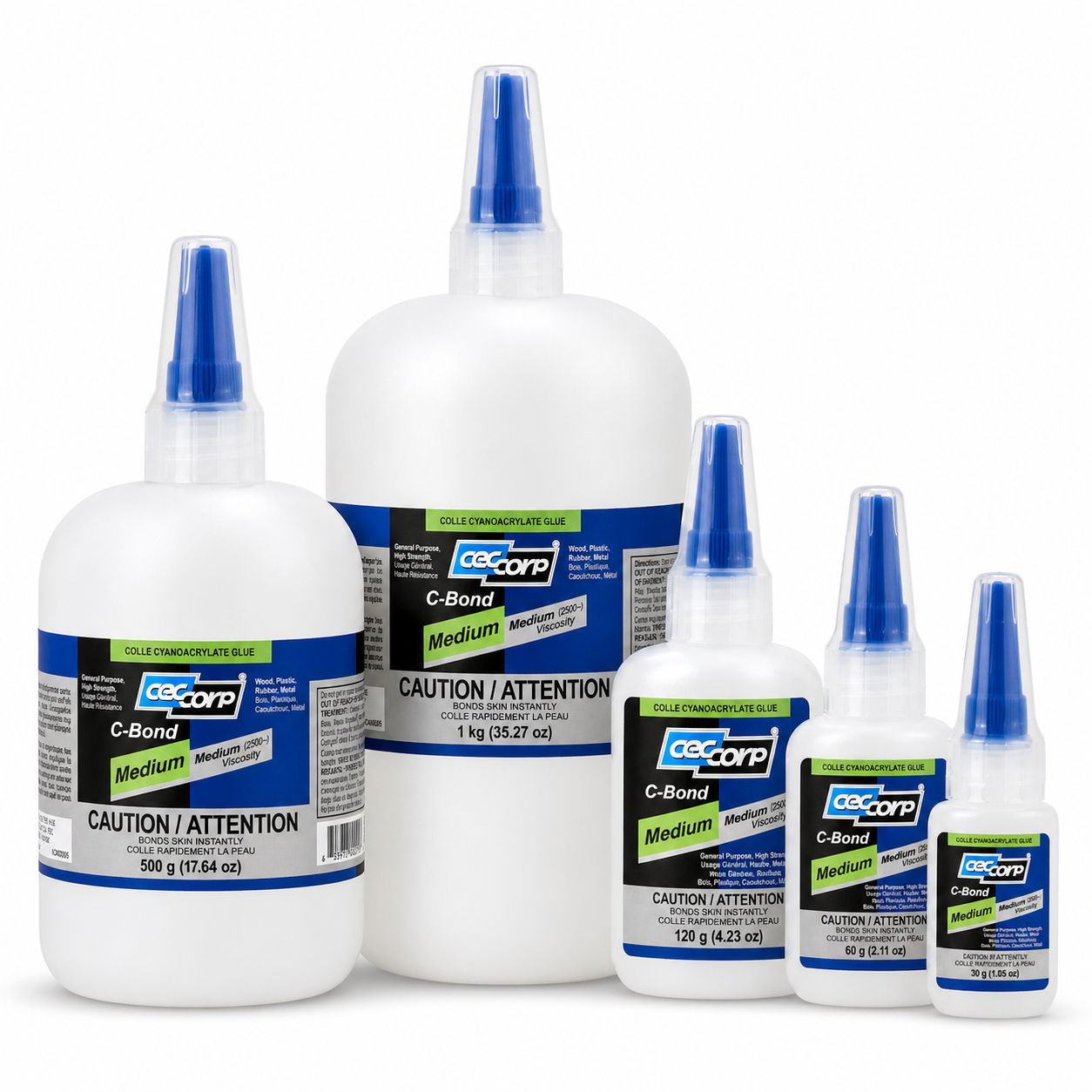
C-Bond Medium Thin CA Glue & C-Bond Medium CA Glue → general bonding, inlays and controlled finishing
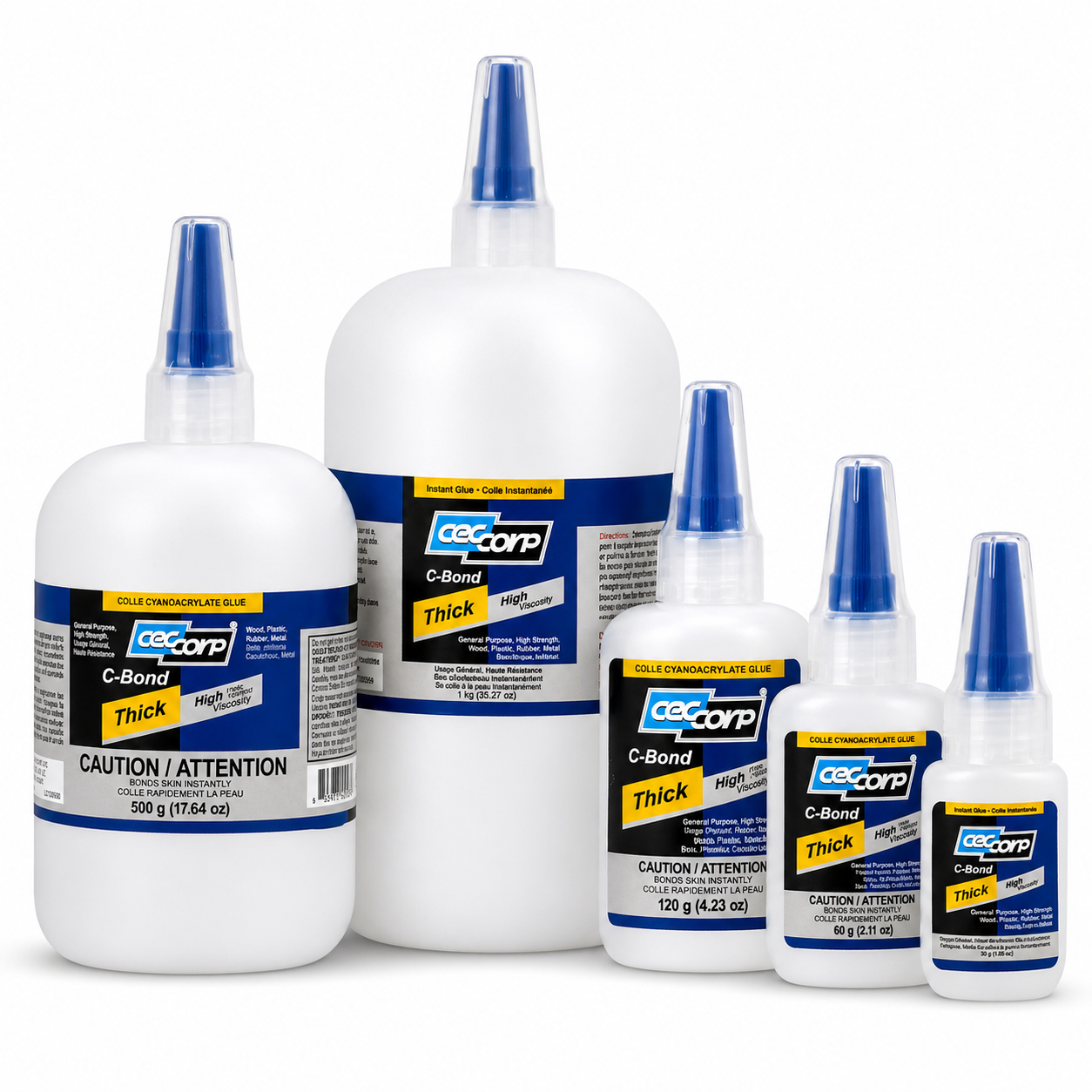
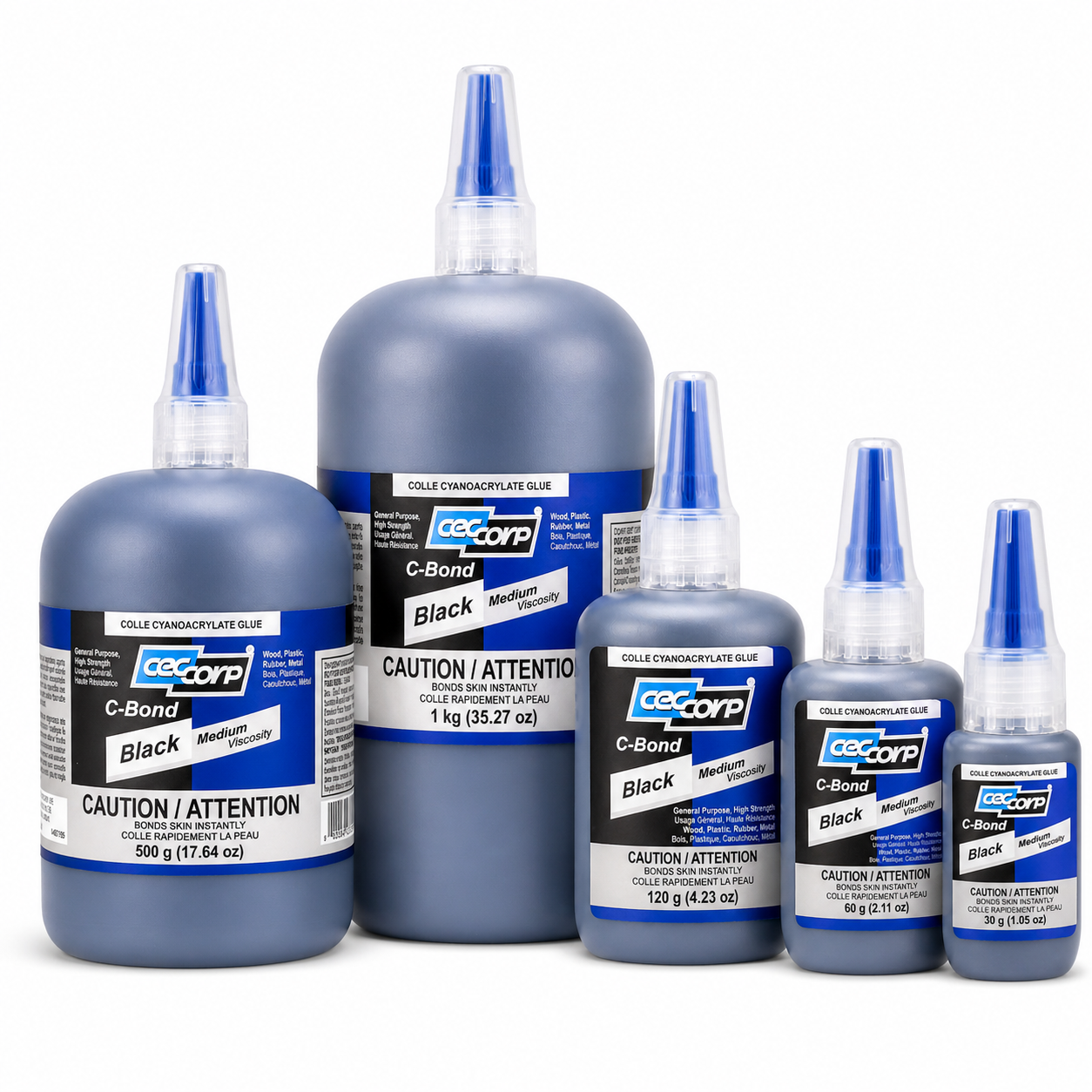
C-Bond Black CA Glue and C-Bond Thick CA Glue → larger gaps, cracks and void filling
For woodturners working with natural materials, where every piece of wood has different pores, cracks, knots and grain structures, having several CA glue viscosities available provides much greater control over both the turning process and the final appearance.