
Cyanoacrylate (CA) glue is well known for its fast cure, strong adhesion, and ability to bond many materials. Once cured, CA glue forms a hard polymer called polycyanoacrylate.
But what happens when a cured CA bond is exposed to water?
Is Cured CA Glue Waterproof?
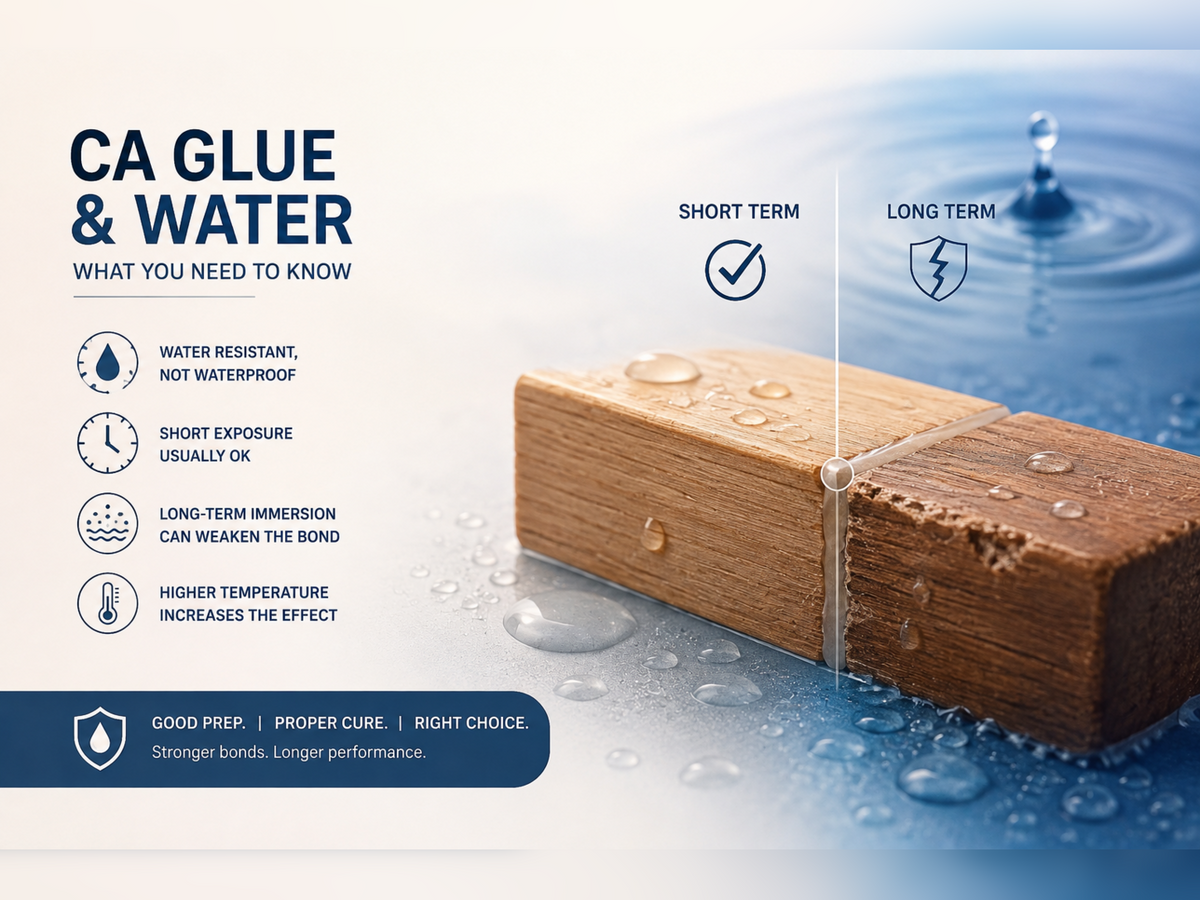
Cured CA glue can generally tolerate occasional contact with water and normal humidity, but standard CA adhesives should not automatically be considered permanently waterproof.
Short-term exposure, such as splashes, cleaning, or temporary moisture, may have little immediate effect on a properly prepared bond. However, continuous immersion, high humidity, elevated temperature, and repeated wet/dry cycles can gradually reduce bond performance.
The important distinction is:
Water resistance ≠ waterproofness.
What Does Water Do to Cured CA Glue?
Water can gradually attack the cured cyanoacrylate polymer through a process known as hydrolytic degradation.
The cured CA polymer contains ester groups that can be susceptible to hydrolysis. Over time, moisture can contribute to degradation of the polymer chains and a reduction in the mechanical properties of the adhesive.
This normally does not mean that a CA bond immediately dissolves when it gets wet. The effect depends strongly on exposure conditions.
Short-Term Water Exposure
For many everyday applications, brief exposure to water may cause little noticeable change.
Examples include:
- Wooden objects occasionally wiped with a damp cloth
- Small household repairs exposed to splashes
- Hobby parts that occasionally get wet
- CA-finished wooden pens or turned pieces exposed briefly to moisture
A well cured CA adhesive can perform very well under these conditions.
Long Term Water Immersion
Continuous immersion is much more demanding.
Over days, weeks, or months, water can penetrate the adhesive and the adhesive/substrate interface. This may eventually cause:
Reduced bond strength → polymer degradation → weakening of the interface → possible bond failure
For permanently submerged components, a water resistant structural epoxy, polyurethane, or another adhesive specifically designed for immersion may therefore be a better choice.
Temperature Makes a Big Difference
Water exposure becomes more aggressive as temperature increases.
A CA bond that performs satisfactorily in occasional contact with cool water may deteriorate considerably faster when exposed to:
Hot water + moisture + prolonged exposure
This is why applications involving hot water washing, steam, dishwashers, or continuous warm water immersion should be evaluated much more carefully than simple room temperature water exposure.
The Bonded Material Also Matters
Water does not affect only the adhesive.
With wood, for example, moisture causes the wood itself to absorb water, swell, and later shrink as it dries. Repeated expansion and contraction can create stress at a relatively rigid CA bond line.
On metals, plastics, ceramics, and composites, the effect can be different because the substrate does not respond to moisture in the same way.
This means water resistance should always be considered as a property of the complete bonded assembly, not just the cured adhesive.
CA Glue Used as a Wood Finish
CA glue is also widely used as a hard, glossy finish for wooden pens, handles, small turned objects, jewelry, and decorative pieces.
Once properly cured and polished, a CA finish can provide good resistance to:
- Hand moisture
- Occasional water contact
- Oils from the skin
- Light household use
However, prolonged soaking or repeated exposure to hot water can eventually affect the finish and its adhesion to the wood.
How to Improve CA Bond Performance Around Water
Good surface preparation and proper curing are especially important when moisture exposure is expected. Clean and dry the surfaces before bonding, use an appropriate bond line thickness, allow the adhesive to fully cure before water exposure, and select a toughened or water-resistant CA formulation when the application demands greater durability.
For applications involving continuous immersion, outdoor exposure, hot water, or critical structural loads, testing under the actual service conditions is strongly recommended.
CA Glue and Water: The Bottom Line
Cured CA glue is water resistant, but standard CA glue should not be assumed to be permanently waterproof.
Brief exposure to moisture is usually much less demanding than long term immersion. The combination of water, temperature, exposure time, substrate movement, and mechanical stress determines how long the bond will maintain its strength.
For everyday repairs, woodworking, wood turning, and many hobby applications, CA glue can provide excellent performance around occasional moisture. For continuous wet service or demanding structural applications, a purpose designed epoxy, polyurethane, or other water-resistant adhesive may be the better choice.
Related Products
Explore CECCORP CA Glue Products


