
Epoxy Glue for Woodworking: Strong, Durable Bonding for Wood Projects
Epoxy glue is one of the most versatile adhesives for woodworking, especially when strength, gap filling, durability, or bonding wood to other materials is required. Unlike many traditional wood glues, epoxy does not rely heavily on absorption into the wood, making it useful for both porous and less-porous surfaces.
From furniture and structural wood assemblies to knife handles, decorative projects, repairs, and mixed-material bonding, epoxy adhesives provide solutions for demanding woodworking applications.
Why Use Epoxy Glue for Wood?
Two-part epoxy adhesives consist of a resin and hardener that chemically react after mixing. Once cured, they can produce a strong, rigid or toughened bond with excellent gap-filling capability.
Epoxy is particularly useful when:
- The joint has gaps or does not fit perfectly
- High bond strength is required
- Wood needs to be bonded to metal, fiberglass, ceramic, stone, or some plastics
- The wood is dense or difficult to bond
- Better moisture and environmental resistance is required
- Longer working time is needed for positioning or assembly
Furniture & Structural Wood Bonding
Epoxy can be an excellent choice for furniture construction, timber components, wooden structures, laminations, and repair work.
Its gap-filling properties are especially valuable when joints are damaged, irregular, or cannot achieve the close contact normally required by conventional woodworking adhesives.
For large or complicated assemblies, a slower-curing epoxy provides additional working time for positioning, clamping, and alignment.
Epoxy for Wood Repairs
Cracks, missing sections, loose joints, knots, and damaged wood can often be repaired using epoxy.
Depending on the application, epoxy can be used as a flowing adhesive or modified into a thick, non-sag or putty-like consistency for larger gaps and vertical repairs.
After curing, many epoxy systems can be sanded, drilled, shaped, machined, and painted.
Bonding Wood to Other Materials
One major advantage of epoxy adhesive in woodworking is its ability to bond dissimilar materials.
Common examples include:
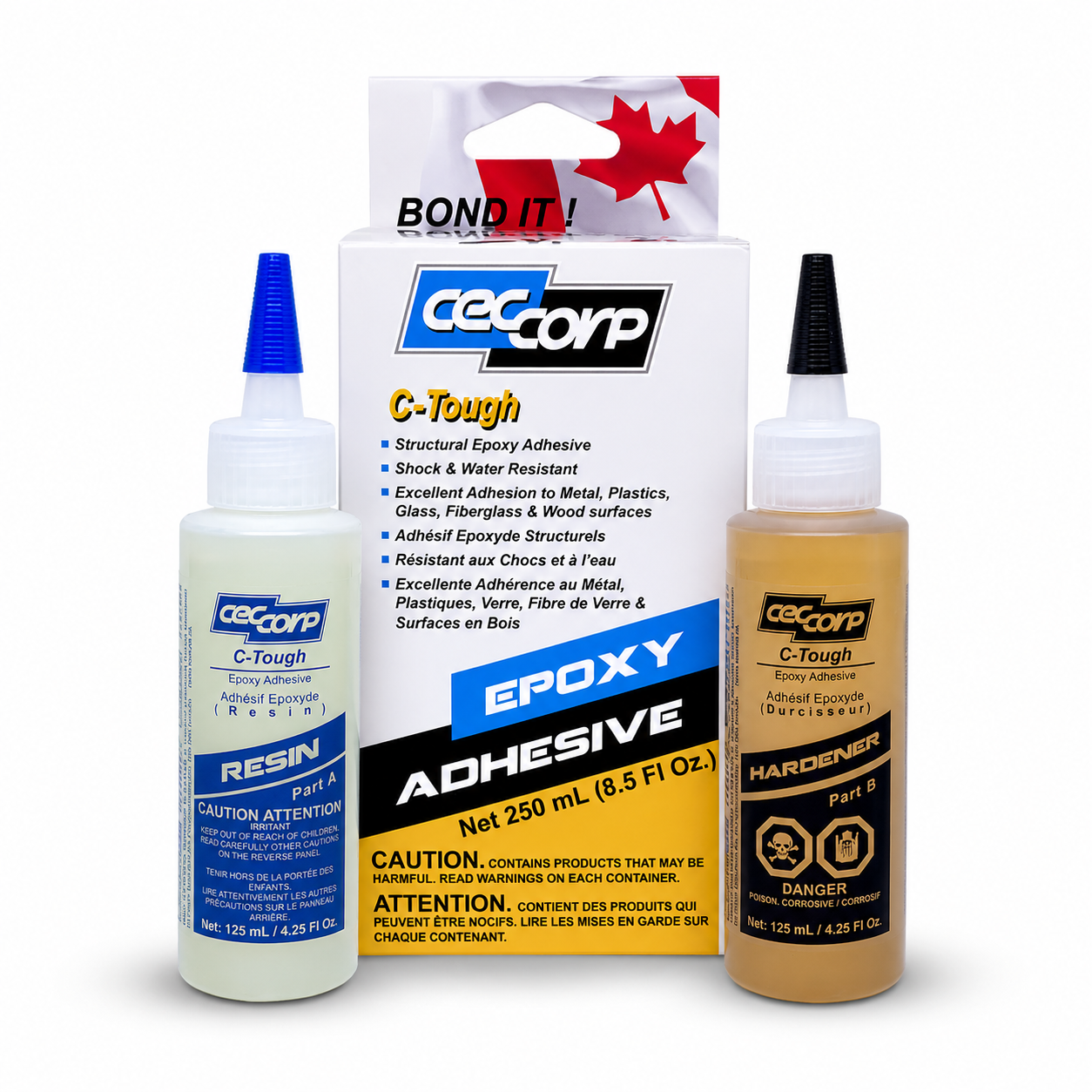
- Wood to metal: furniture hardware, decorative metal components, tools and fixtures (C-Tough)
- Wood to fiberglass or composites: marine, restoration and specialty fabrication (C-Tough)
- Wood to stone or ceramic: furniture and decorative projects (C-Tough)
- Wood to compatible plastics: mixed-material assemblies and custom fabrication (C-Tough)
Proper surface preparation remains important, particularly when bonding metals, oily woods, or difficult surfaces.
Epoxy for Knife Handles & Tool Handles
C-Tough + C-POXY S20 + C-POXY S120 (Coming soon) + C-POXY E20
Epoxy adhesives are widely used for attaching wooden knife scales and tool handles because they can fill small machining tolerances while creating a strong bond between wood and metal.
A toughened epoxy can be particularly useful where the finished part will experience impact, vibration, temperature changes, or repeated mechanical stress.
Working With Oily & Dense Woods
Some exotic woods naturally contain oils and extractives that can interfere with adhesion.
For woods such as teak, rosewood, cocobolo and other oily species, careful surface preparation becomes especially important. Fresh sanding followed by appropriate cleaning immediately before bonding can help improve adhesion.
An epoxy system designed for difficult substrates may also provide better results than a general-purpose adhesive.
Choosing the Right Epoxy Cure Speed
Not every woodworking project needs the same epoxy.
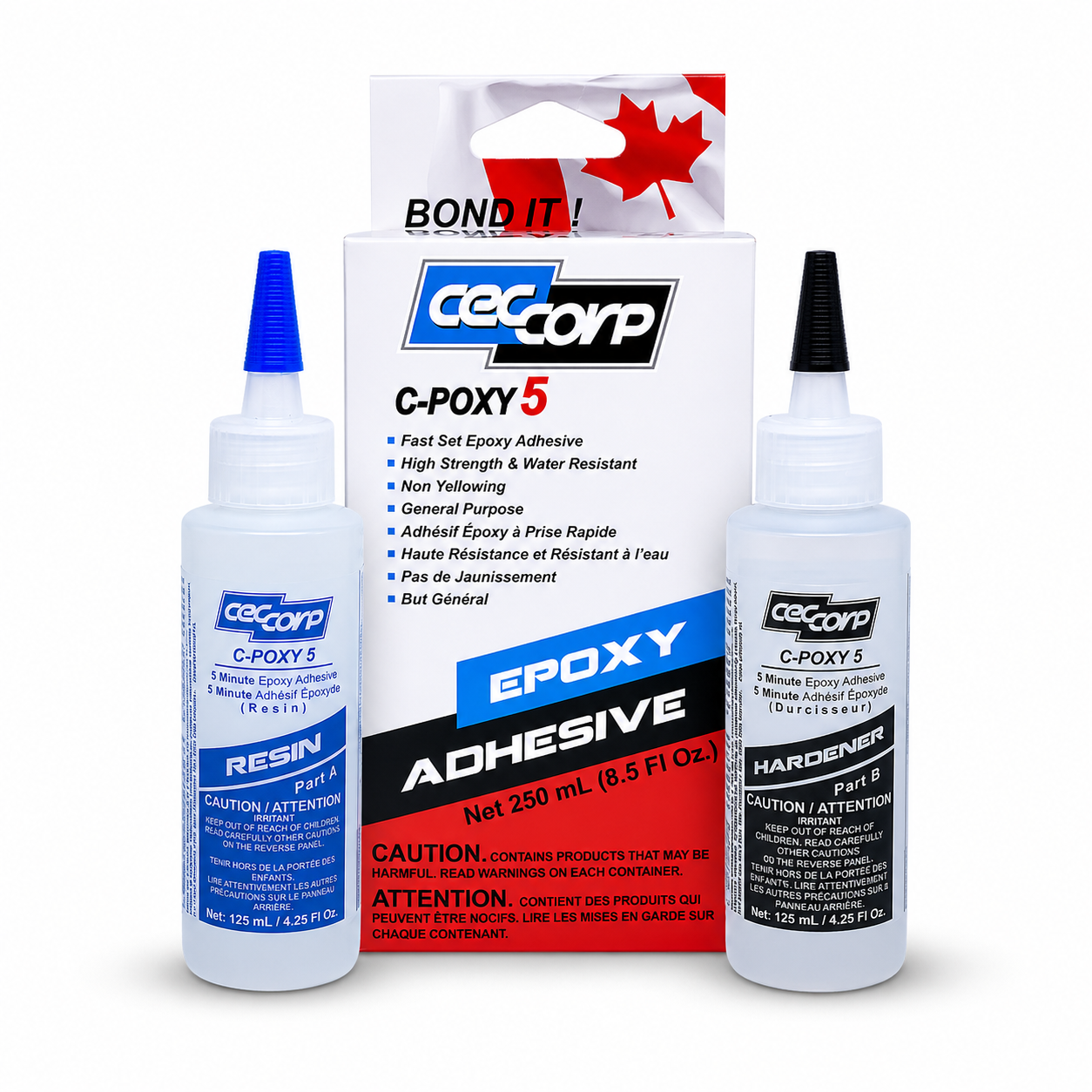
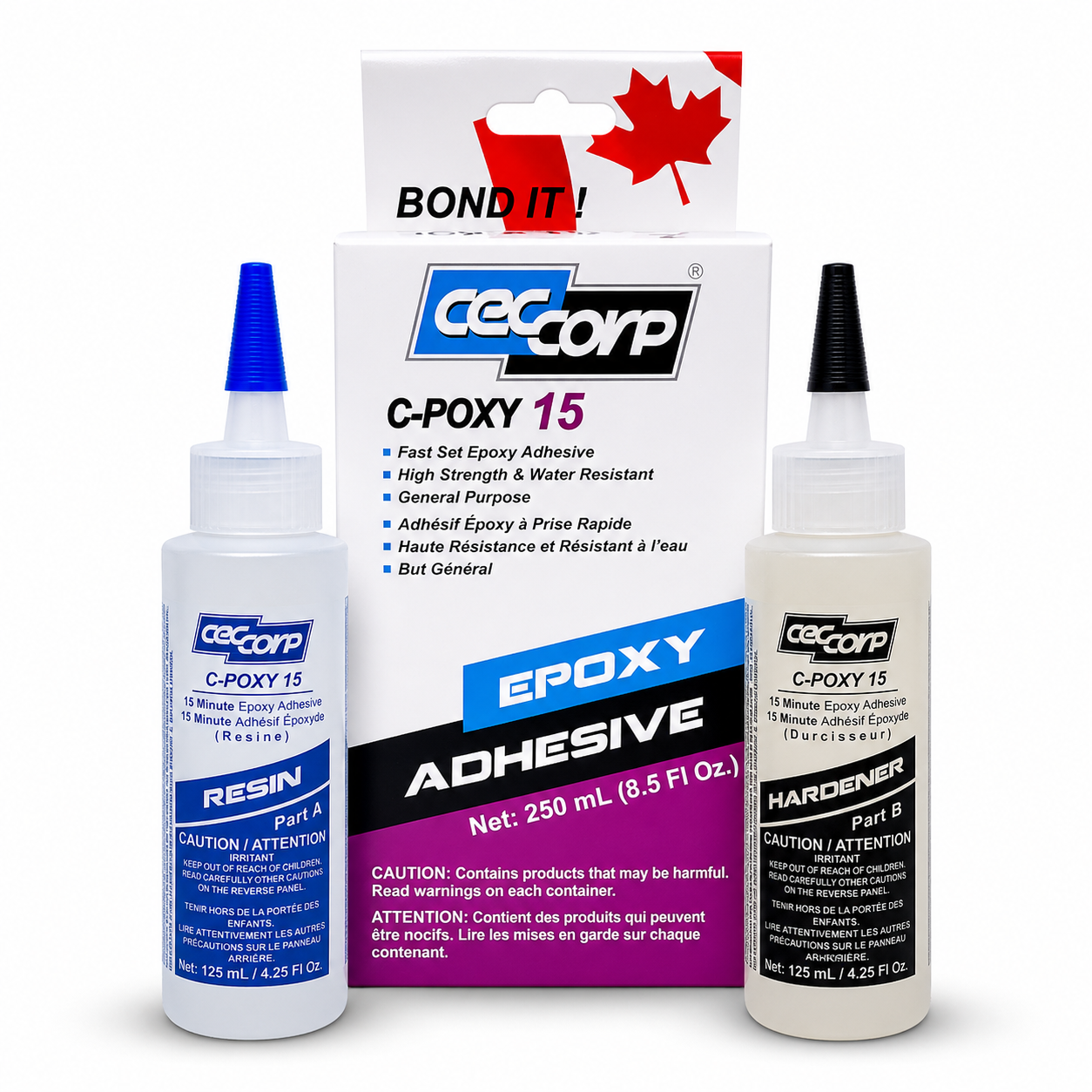
Fast setting epoxy → Fast setting epoxy is convenient for small repairs and quick assemblies. C-POXY 5 + C-POXY 15
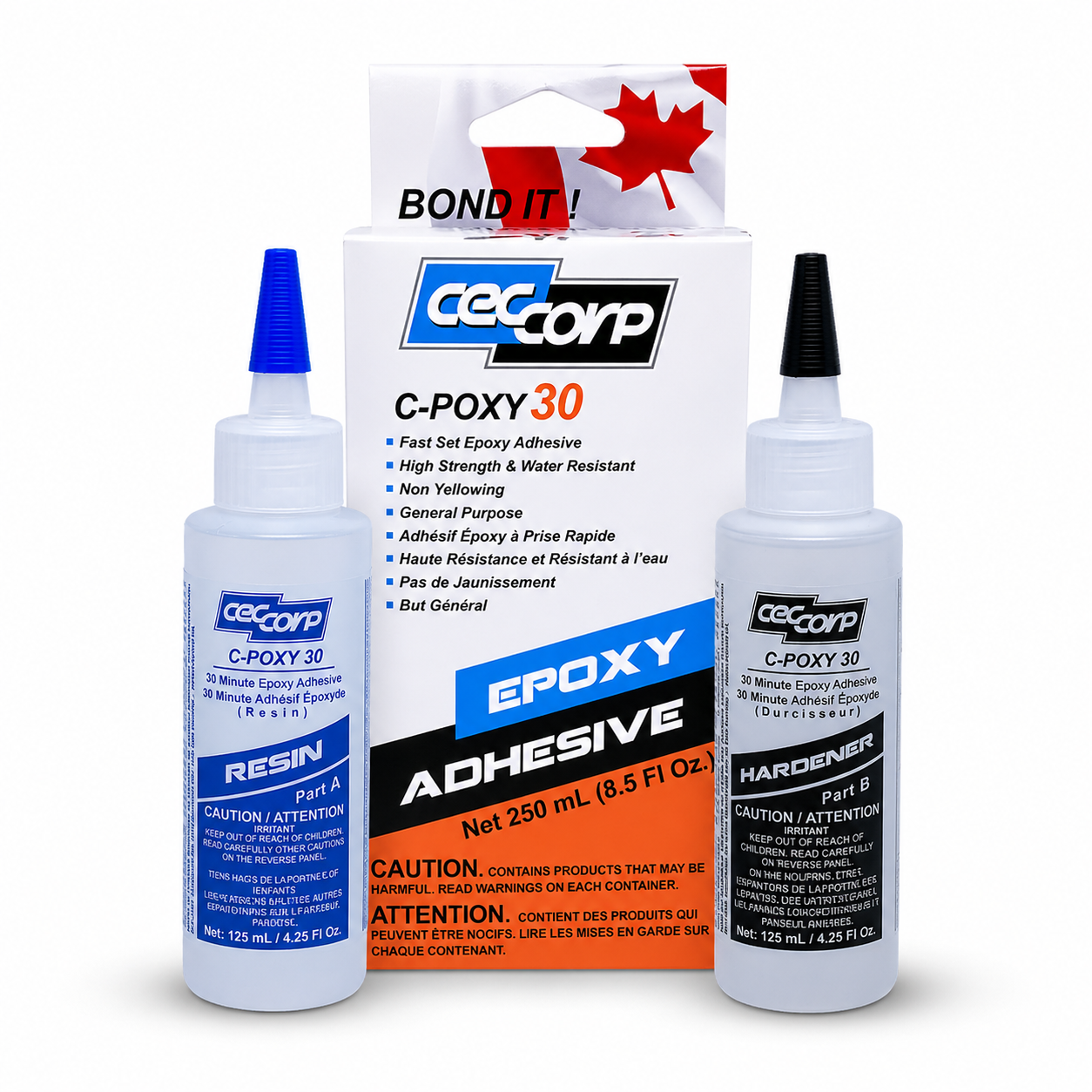
Medium cure epoxy → Medium cure epoxy provides more time for positioning, clamping and general woodworking. C-POXY 30, C-POXY S20, and C-POXY E20
Slow cure epoxy → Slow cure epoxy is often preferable for larger assemblies, complicated joints, deep repairs and applications where maximum working time is important. C-Tough and C-POXY S120 (Coming soon)
The best epoxy is therefore not necessarily the fastest one, it is the adhesive that provides enough working time, gap filling, strength and durability for the specific woodworking project.
Epoxy Glue vs. CA Glue for Woodworking
Both adhesives are valuable, but they serve different purposes.
CA glue is ideal for extremely fast bonding, small repairs, stabilization, fine cracks, inlays and woodturning applications.
Epoxy glue is better suited to larger gaps, structural or demanding assemblies, mixed-material bonding and applications requiring longer working time.
For many professional woodworkers and serious hobbyists, keeping both CA glue and epoxy adhesive available provides solutions for a much wider range of woodworking challenges.