
Epoxy Adhesive for Knife Handle Assembly
A knife handle may look simple, but the adhesive bond inside it must withstand impact, vibration, moisture, temperature changes, and repeated mechanical stress. A high performance epoxy adhesive is an excellent choice for assembling knife handles because it provides strong, durable bonding across many of the materials commonly used in knife making.
Whether you’re building a custom knife, replacing handle scales, or assembling knives in production, choosing the right epoxy can significantly affect the durability of the finished handle.
Common Materials Used in Knife Handles
Knife handles often combine a steel tang with handle scales made from materials such as:
- Hardwood and stabilized wood
- Micarta
- G10 and other fiberglass composites
- Carbon fiber composites
- Bone and horn
- Aluminum and other metals
- Many engineered plastics
The adhesive must bond the handle scales securely to the metal tang while filling the small gaps and surface irregularities between the components.
Why Epoxy Adhesive Works So Well
Epoxy adhesives are particularly suitable for knife handle assembly because they offer a combination of high adhesion, gap filling, toughness, and resistance to environmental exposure.
Unlike very thin instant adhesives, epoxy can accommodate variations between the tang and handle scales and create a continuous bond across a relatively large surface.
A properly selected epoxy can provide:
High bond strength: Excellent adhesion to prepared steel, wood and many composite materials.
Gap filling: Helps compensate for small machining tolerances and uneven surfaces.
Impact resistance: Important because knives can experience drops, chopping forces, vibration and repeated shock loading.
Moisture resistance: Helps maintain the integrity of the handle during exposure to water and normal cleaning.
Temperature resistance: Particularly useful for knives exposed to demanding working environments.
Long term durability: A properly prepared epoxy bond can remain strong through years of repeated use.
C-Tough: For Maximum Performance
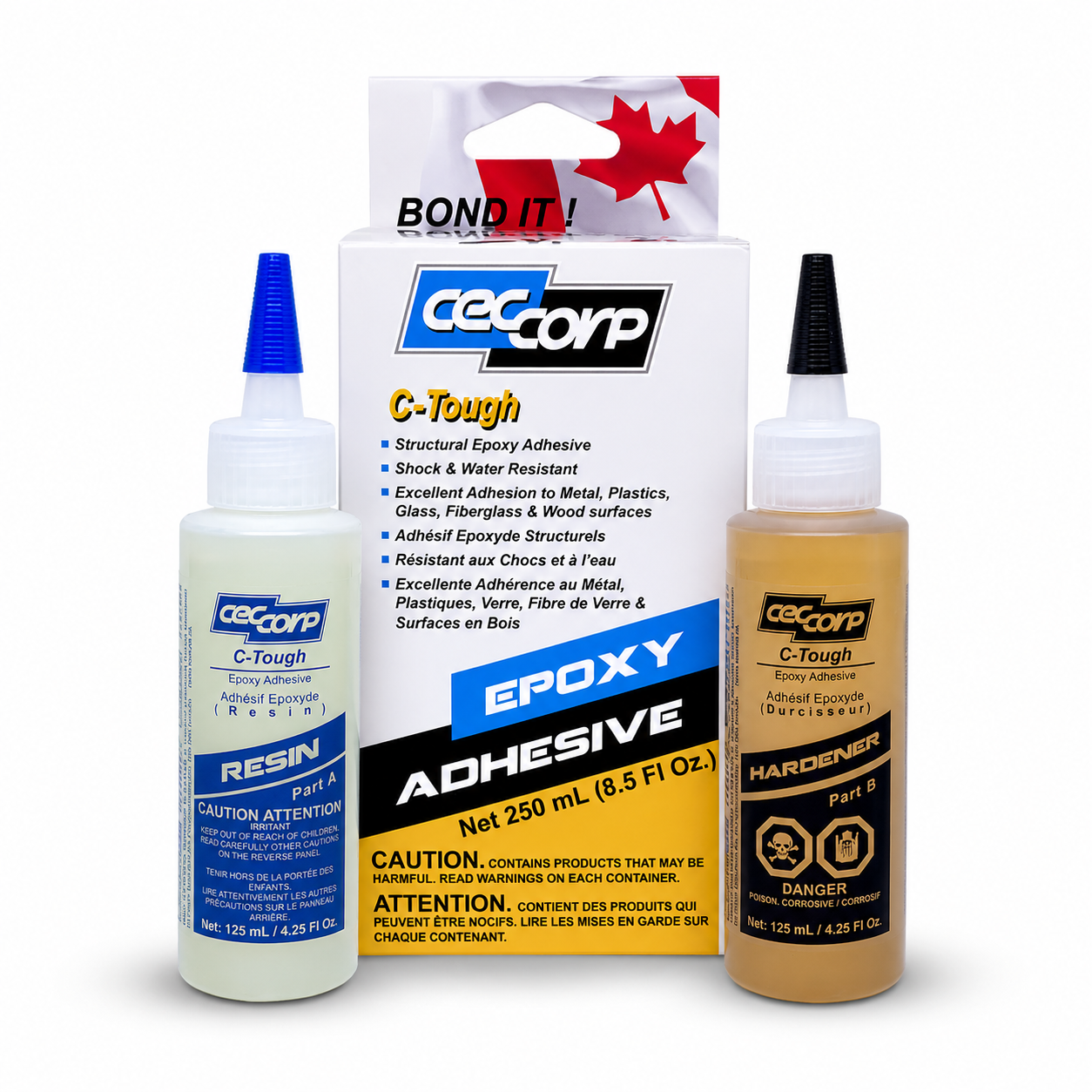
For demanding knife making applications, CECCORP C-Tough Epoxy Adhesive is an excellent choice when maximum durability is the priority.
C-Tough is particularly suitable when you need:
- High adhesion
- High impact resistance
- High temperature resistance
- Long working time
- Strong bonding to metals, wood and many composites
- Excellent gap filling capability
The long working time is especially valuable for custom knife assembly. It gives the maker more time to accurately position the scales, pins and other components before clamping.
Its toughness and impact resistance also make C-Tough well suited for working knives, outdoor knives, hunting knives and other demanding applications where the handle may experience repeated shock and mechanical stress.
C-Poxy 30: For Faster Knife Assembly
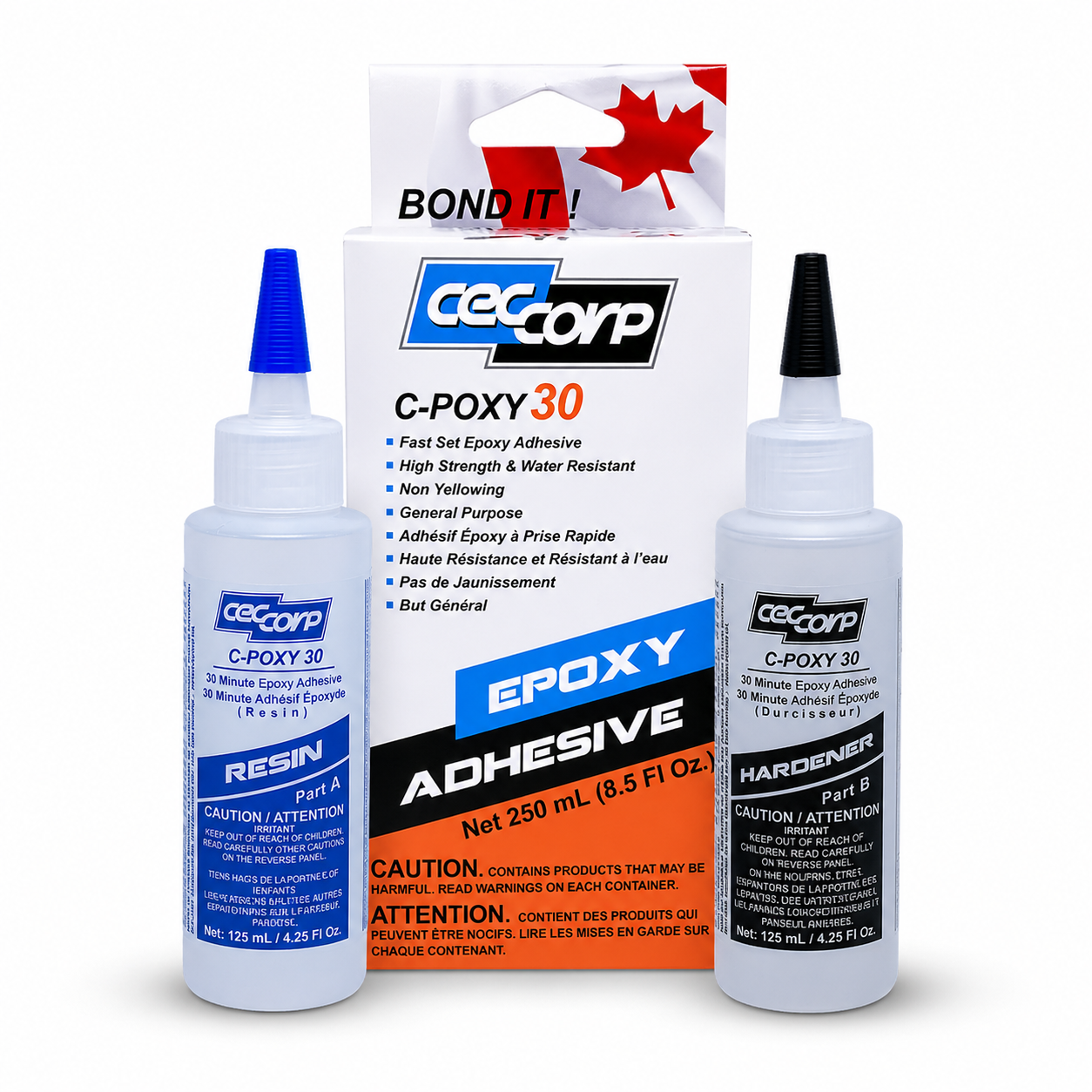
When a faster production or repair process is preferred, CECCORP C-Poxy 30 provides another practical option.
Its approximately 30-minute working/cure profile provides enough time for positioning and assembly while allowing the knife making process to move considerably faster than with a long working time structural epoxy.
C-Poxy 30 is a good choice for:
- General knife handle assembly
- Custom knife making
- Handle scale replacement
- Workshop repairs
- Small production runs
- Applications where faster turnaround is important
Choose C-Tough when maximum toughness, temperature resistance and working time are the priority. Choose C-Poxy 30 when you want a strong epoxy bond with a faster assembly process.
Recommended Knife Handle Bonding Process
Good surface preparation is just as important as choosing the adhesive.
1. Prepare the steel tang
Remove oil, grease, rust and contamination. Lightly abrading the bonding surface can increase the effective bonding area and improve mechanical anchoring.
2. Prepare the handle scales
Sand the bonding side of wood, G10, Micarta or other handle materials to create a clean and slightly roughened surface. Remove sanding dust before bonding.
3. Dry fit everything first
Position the scales, pins and other components before mixing the epoxy. Make sure everything fits correctly.
4. Mix the epoxy thoroughly
Mix the resin and hardener according to the specified ratio until the adhesive is completely uniform.
5. Apply epoxy to the bonding surfaces
Apply enough adhesive to create complete coverage between the tang and scales. Pay particular attention to areas around pins and small gaps.
6. Assemble and clamp
Position the scales and apply even clamping pressure. Avoid excessive pressure that could squeeze nearly all of the adhesive out of the joint.
7. Allow the epoxy to fully cure
Keep the assembly securely positioned until the adhesive has developed sufficient strength. For maximum performance, allow the epoxy to reach its specified full cure before putting the knife into service.
A Strong Knife Starts Inside the Handle
Pins and mechanical fasteners are important, but the adhesive creates a continuous connection between the knife tang and handle scales.
For demanding knife handles where toughness, impact resistance, temperature resistance and longer assembly time are important, CECCORP C-Tough provides a high-performance solution.
For everyday knife making and applications where faster assembly is preferred, CECCORP C-Poxy 30 provides a practical alternative with the handling advantages of a two-component epoxy adhesive.
Strong materials + proper surface preparation + the right epoxy = a knife handle built for long term use.