
Epoxy Adhesive for Golf Shaft Repair and Assembly
Epoxy adhesive is one of the most widely used adhesive technologies for golf club assembly and repair. A properly selected two-part epoxy creates a strong, durable connection between the golf shaft and club head while providing the working time, gap filling capability, and impact resistance required for the repeated forces experienced during play.
Whether assembling a new club, replacing a shaft, or repairing an existing club, choosing the right epoxy is an important part of creating a reliable golf club assembly.
Understanding Golf Club Materials
Golf club assembly involves bonding materials with very different properties.
Golf Shafts
Modern golf shafts are commonly manufactured from:
- Graphite/carbon fibre composites : lightweight and widely used in drivers, woods, hybrids, and many irons
- Steel : commonly used for iron and wedge shafts
- Multi material or composite constructions : combining different materials to control weight, stiffness, and performance
Golf Club Heads
Club heads and hosels may be manufactured from materials such as:
- Stainless steel
- Carbon steel
- Titanium and titanium alloys
- Other engineered metal alloys
The epoxy must therefore provide reliable adhesion to both the shaft material and the inside surface of the club-head hosel.
Why Epoxy Is Used for Golf Shaft Assembly
When a golf ball is struck, the shaft to head connection experiences significant impact, vibration, bending, and repeated dynamic loading.
For this reason, golf club epoxy should provide more than simply high static strength.
A suitable adhesive should offer:
Strong adhesion + toughness + impact resistance + controlled working time + good gap filling
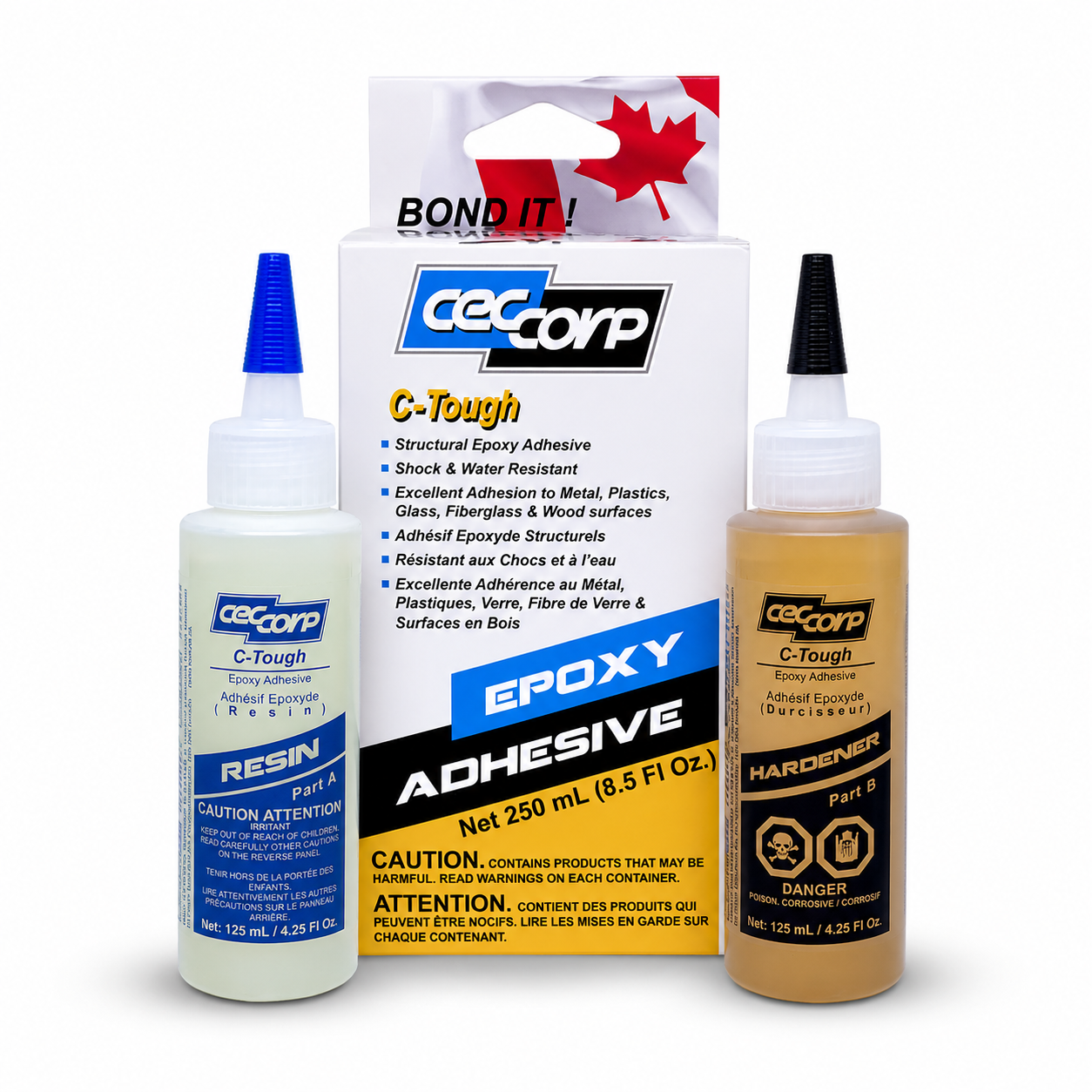
Consider C-Tough, C-Poxy E20 , C-Poxy S20 , C-Poxy S120, and C-Poxy FL40 .
A very hard but brittle adhesive may not always be the best choice. A toughened epoxy adhesive can better accommodate shock and repeated impact without cracking or losing adhesion.
Impact Resistance Matters
Golf clubs experience thousands of repeated impact cycles during their service life.
A good golf shaft epoxy should maintain its bond despite:
- Repeated ball impacts
- Vibration
- Shaft flexing
- Torsional stresses
- Temperature changes during storage and use
- Differences in movement between metal and composite materials
This is why toughness and impact resistance are important properties when selecting an epoxy for golf club assembly and repair.
Working Time: Fast vs. Slow Epoxy
Working time is another important consideration.
Fast-Setting Epoxy
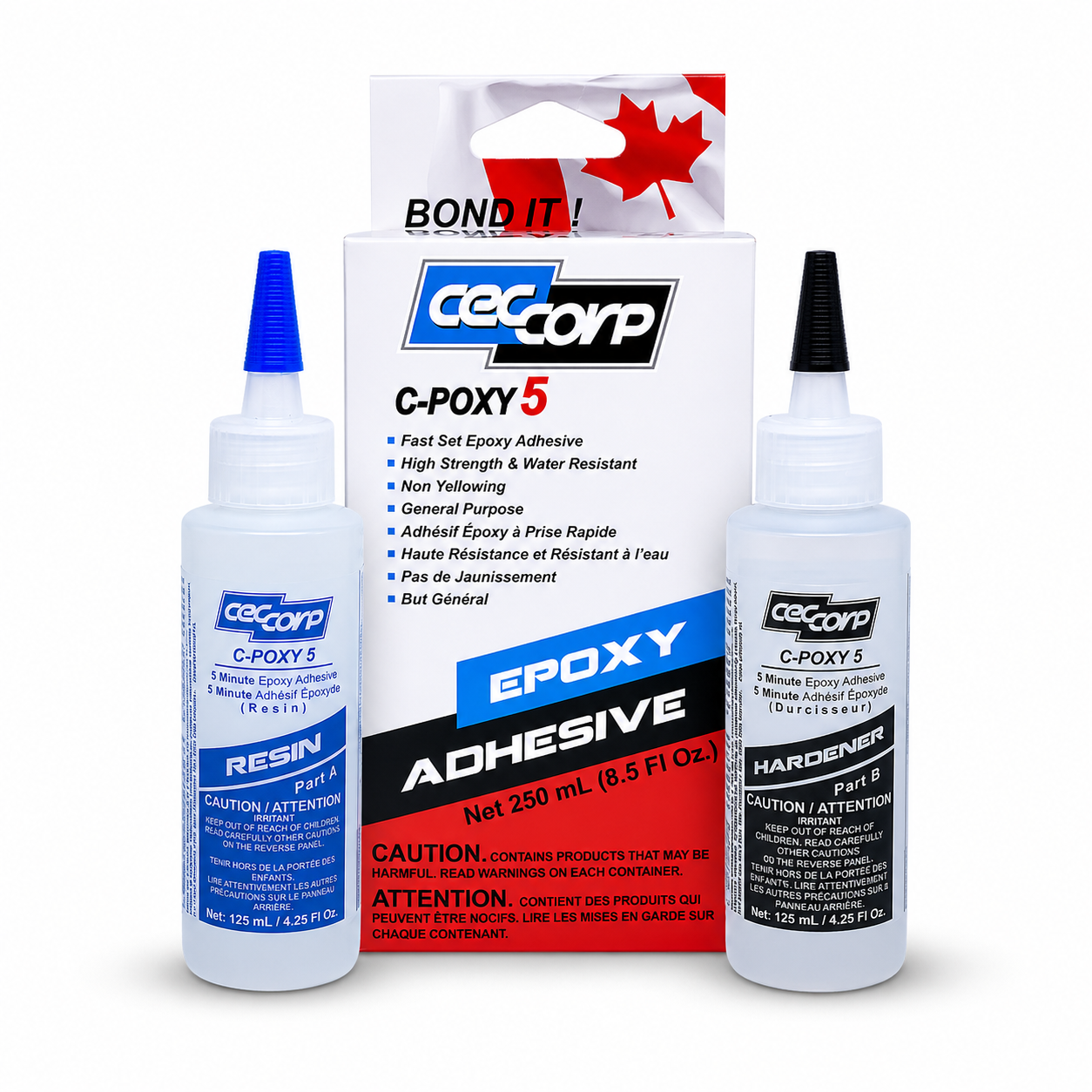
A fast-setting epoxy can be useful for individual repairs or small-volume club assembly when rapid turnaround is important. Consider C-Poxy 5.
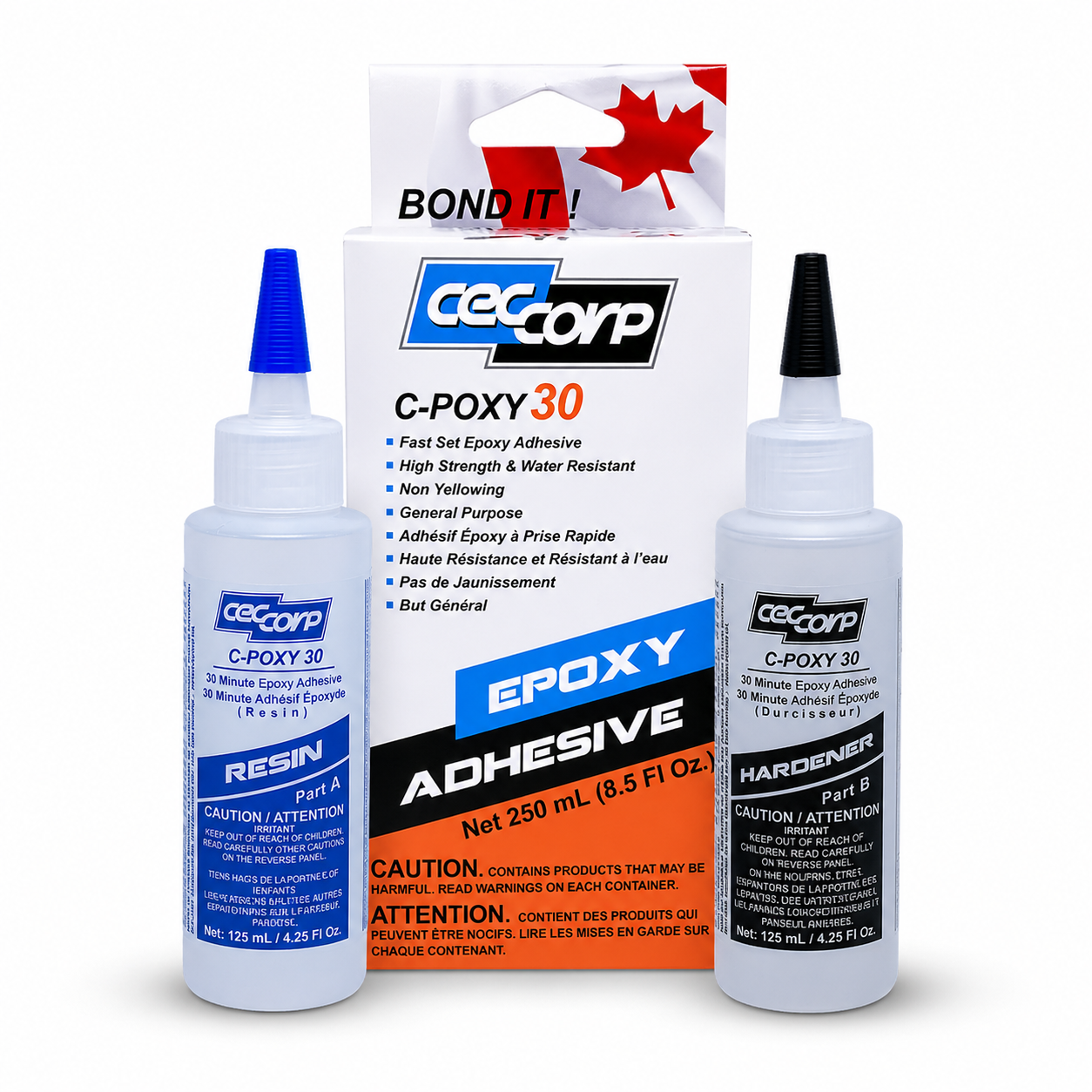
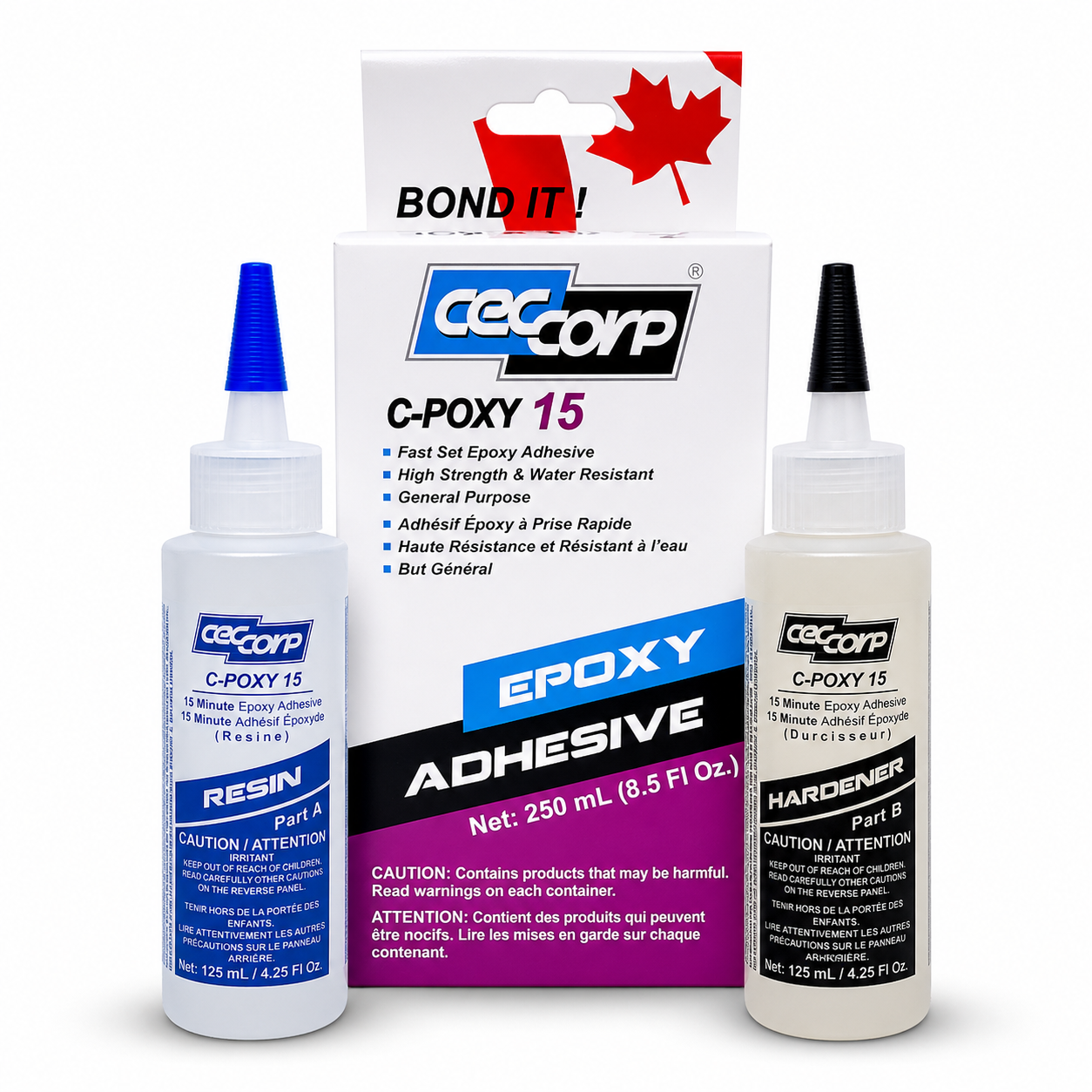
However, extremely short working times provide less opportunity to properly wet the surfaces, position the shaft, align graphics, adjust components, and clean excess adhesive. Consider C-Poxy 15 or C-Poxy 30.
Medium Working-Time Epoxy
For many golf club assembly applications, a moderate working time of approximately 15–30 minutes provides a practical balance between convenient assembly and reasonable cure speed. Consider C-Poxy 30, C-Poxy E20 , C-Poxy S20 , and C-Poxy FL40 .
It gives the technician enough time to:
- Apply the epoxy thoroughly
- Insert and rotate the shaft for good adhesive distribution
- Position the shaft correctly
- Align the club
- Clean excess epoxy
Longer Working-Time Epoxy
Consider C-Tough or C-Poxy S120.
For assembling multiple clubs or complete sets, a working time of 30–60 minutes or longer may be preferable.
Longer-working-time systems provide more flexibility during production and can be particularly useful when several shafts and club heads must be assembled during the same session.
The appropriate working time depends on the assembly process, not simply on how quickly the epoxy can cure.
Gap Filling in the Shaft to Hosel Connection
The shaft and hosel do not always create a perfectly zero-gap connection.
Epoxy can fill the small space between the shaft and the internal hosel surface while maintaining a continuous adhesive layer. Proper viscosity is important: the epoxy should flow enough to wet both surfaces, but should not drain excessively from the joint before curing.
In some club assemblies, ferrules, shims, shafting beads, or other fitting components may also be used, depending on the shaft and hosel dimensions.
Surface Preparation Is Critical
Even a high-performance epoxy cannot compensate for poor surface preparation.
For reliable golf club assembly, the bonding surfaces should generally be clean, dry, and properly abraded.
Steel shaft tips are commonly prepared to remove coatings and expose a clean bonding surface. Graphite shafts require more careful preparation because excessive sanding can damage the carbon fibre structure.
The inside of the hosel should also be cleaned of old adhesive, contamination, oils, and loose material before the new shaft is installed.
Golf Shaft Repair vs. Replacement
When people refer to golf shaft repair, they often mean removing and replacing a shaft or restoring the shaft to club head connection.
A structurally cracked or significantly damaged graphite or steel shaft generally should not simply be glued back together and treated as equivalent to an undamaged shaft. Shaft replacement is usually the more appropriate approach for structural shaft damage.
Epoxy is primarily used to create the critical shaft to hosel bond during assembly and re shafting.
Choosing an Epoxy for Golf Club Assembly
A good golf club shafting epoxy should provide a balanced combination of:
High adhesion to steel, titanium, and properly prepared graphite/composite surfaces → C-Tough and C-Poxy S20 .
High impact and shock resistance for repeated club strikes → C-Tough and C-Poxy FL40 .
Toughness rather than excessive brittleness → C-Tough and C-Poxy FL40 .
Appropriate viscosity and gap filling for the shaft to hosel connection → C-Poxy S20 , C-Poxy E20 , C-Poxy S120, and C-Tough.
Sufficient working time for accurate assembly → C-Tough and C-Poxy S120.
Reliable cure before the club is returned to play → C-Poxy 30, C-Poxy S20 , and C-Poxy E20 .
For golf club assembly, the best epoxy is therefore not necessarily the fastest-curing or highest-strength epoxy on a data sheet. The adhesive needs the right balance of adhesion, toughness, impact resistance, working time, and processing characteristics for a durable shaft to head connection.